Los Angeles County Museum of Art Museums Los Angeles
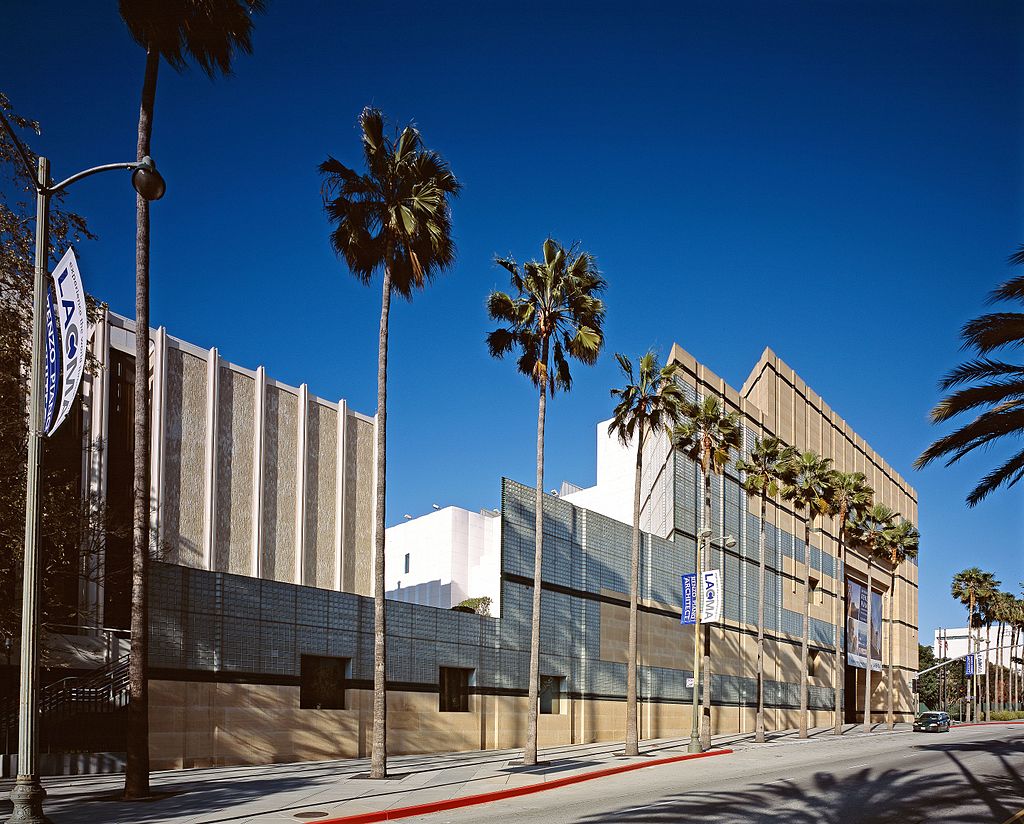
Los Angeles Canton Museum of Fine art – Virtual Tour
The Los Angeles County Museum of Art (LACMA) is on Museum Row, LA, and information technology is the largest art museum in the western United states.
The Los Angeles Canton Museum of Art holds more than 150,000 works of art spanning the history of art from ancient times to the present.
A Virtual Tour of the Los Angeles Canton Museum of Fine art
- "The Raising of Lazarus" by Rembrandt
- "Magdalene with the Smoking Flame" by Georges de La Tour
- Shiva every bit the Lord of Dance
- "Cliff Dwellers" by George Bellows
- "Plato" by Jusepe de Ribera
- Bawl Painting – Arnhem Land, Commonwealth of australia
- "Mrs. Schuyler Burning Her Wheat Fields on the Approach of the British" past Emanuel Leutze
Highlights of the Los Angeles Canton Museum of Art
"The Raising of Lazarus" by Rembrandt
"The Raising of Lazarus" by Rembrandt, depicts the scene from the New Attestation Bible. For the cosmos of this limerick, Rembrandt experimented with drawings and etchings on this subject with differing configurations.
This scene is in a tomb with Christ standing in the cave with his mitt raised to perform the phenomenon. Rembrandt represents Lazarus's rising as caused by Christ's forceful gesture and his faith. Lazarus' sisters Mary and Martha look on in amazement, as do the other spectators.
The astounded witnesses' expressions record successive states of awareness and awe. The dramatic darkness of the cavern is in dissimilarity to the subtle colors in the costumes.
The glinting highlights of the quiver and scabbard hanging on the wall were Lazarus' weapons, as according to medieval legend, Lazarus was a soldier.
"Magdalene with the Smoking Flame" by Georges de La Tour
"Magdalene with the Smoking Flame" past Georges de La Tour depicts Mary Magdalene and was inspired past several themes popular with artists during the 1600s, such as the cult of Magdalene, melancholy and repentance.
De La Tour, the French Baroque painter who painted this masterpiece in 1640, has given it a feeling of philosophical meditation that provides the opportunity for meditation and reflection.
Mary Magdalene'due south body is enveloped in mysterious darkness, and her confront brightened simply past the candle. On her knees is a skull, and on the tabular array are some books and a lit candle wick floating in a glass of oil.
There is too a wooden cross and a claret-stained scourge. The skull represents a play on words, representing Golgotha, the place of Christ'southward crucifixion, as well every bit the Aramaic give-and-take for skull.
The objects in this painting symbolize and reference the themes of repentance and the trials sent by God.
Shiva as the Lord of Dance
"Shiva as the Lord of Dance" depicts the Hindu God Shiva and combines in a unmarried image his roles every bit creator, preserver, and destroyer of the universe and conveys the concept of the never-ending cycle of fourth dimension.
Shiva has many guises and many representations in art, but the most popular is as a dancing figure within the arch of flames, chosen Shiva Nataraja, Lord of the Trip the light fantastic.
Nataraja is a delineation of the Hindu god Shiva as the catholic ecstatic dancer. The pose and artwork are described in many Hindu texts, and the dance relief is featured in major Hindu temples of Shaivism.
It is an epitome seen in museums and temples across the world, and it is rich in iconography and hidden meaning.
The French sculptor Auguste Rodin wrote that the sculpture of Shiva every bit the Lord of Dance has: "what many people cannot meet—the unknown depths, the core of life. There is grace in elegance, simply beyond grace, there is perfection."
"Cliff Dwellers" by George Bellows
"Cliff Dwellers" by George Bellows depicts the density and crowds on New York City's Lower East Side, on a hot summertime's 24-hour interval. The painting, fabricated in 1913, highlights the urban center's explosive population growth.
The city grew from 1-and-a-half to five million in the forty years proceedings this delineation, primarily due to immigration. In this painting, people spill out of tenement buildings onto the streets, stoops, and fire escapes.
Laundry flaps overhead and a street vendor hawks his appurtenances from his pushcart amid all the traffic. In the background, a trolley auto heads toward Vesey Street.
Many of the new arrivals, Italian, Jewish, Irish, and Chinese, crowded into tenement houses on the Lower East Side. Among them were thousands of Eastern European Jews, who found temporary or permanent shelter along streets such as East Broadway, the setting for Cliff Dwellers.
Cliff Dwellers skillfully conveys the sense of congestion, overpopulation, and the impact of the city on its inhabitants. The living quarters of many of the Cliff Dwellers were small, dense, and dark, which is illustrated in this limerick.
The painting also shows how industrialization had impacted the working-class lifestyle at that time.
"Plato" past Jusepe de Ribera
"Plato" by Jusepe de Ribera is shown looking to the heavens and towards the light to symbolize his significant influence on Saint Augustine and, as a issue, Christianity.
Plato advocated a belief in the immortality of the soul, and several of his famous dialogues end with long speeches imagining the afterlife.
The asceticism depicted in this composition was in keeping with Spanish Catholicism and is distinctive of the saints and philosophers that Ribera painted. Plato is portrayed with deep creases in his worn face, but with sturdy hands that hold what he treasures.
Plato is portrayed wearing ragged robes to symbolize the "beggar philosopher," a popular rhetorical device in the seventeenth century. Plato is shown surrounded by a calorie-free reminiscent of Caravaggio.
This painting is part of a serial of half-dozen portraits of ancient philosophers commissioned by various wealthy and powerful sponsors.
Bark Painting – Arnhem Land, Commonwealth of australia
The earliest surviving bark paintings date from the nineteenth century. The modern grade of bawl paintings first appeared in the 1930s, when missionaries at Yirrkala and Milingimbi asked the local Yolngu people to produce bark paintings that could exist sold in the major cities of Australia.
The missionaries were interested in earning funds that would help pay for the mission, and also to brainwash white Australians about Aboriginal culture.
As the trade grew, and the need for paintings increased, leading artists started being asked to mount exhibitions.
It was not until the 1980s that bark paintings started being regarded as fine art, as opposed to Indigenous handicrafts.
Today fine bark paintings are valued on the skill and fame of the artist and the quality of the art. The degree to which the artwork encapsulates the culture past telling a traditional story can command high prices in the art market.
"Mrs. Schuyler Called-for Her Wheat Fields on the Approach of the British" past Emanuel Leutze
"Mrs. Schuyler Burning Her Wheat Fields on the Arroyo of the British" by Emanuel Leutze depicts Catherine Van Rensselaer Schuyler, wife of General Philip Schuyler, setting burn down to her wheat fields as per General Schuyler scorched-globe policy to keep them from the enemy.
The British's imminent arrival is announced past a messenger in this limerick, which Leutze conceived every bit a theatrical scene. Mrs. Schuyler is the central object of attending and is dressed in a red, white, and blue gown to underscored the patriotic deed.
The British under John Burgoyne arrived at Saratoga, now called Schuylerville, on September xiii, 1777, and occupied her house, which was then burned downwards during Saratoga's Battle.
The starting time account of this act of heroism appeared in Mrs. Schuyler in Elizabeth F. Ellet's "The Women of the American Revolution," published in 1848. It was one of the many anthologies of Revolutionary State of war feminine heroism popular during the period.
Los Angeles County Museum of Art
- Name: Los Angeles County Museum of Fine art (LACMA)
- City: Los Angeles
- Country: United States
- Established: 1910
- Type: Art Museum
- Location: 5905 Wilshire Boulevard, Los Angeles
Los Angeles Canton Museum of Art – 360 View
Los Angeles Canton Museum of Fine art Map
Los Angeles County Museum of Fine art – 360 View
New York Museums
- The Metropolitan Museum of Fine art or MET
- Museum of Modern Art (MoMA)
- Intrepid, Body of water, Air & Space Museum
- Neue Galerie New York
- The Cloisters
- Solomon R. Guggenheim Museum
- American Museum of Natural History
- Museum of the City of New York
- New-York Historical Society
- Frick Collection
- Met Breuer
- Rubin Museum of Art
- Brooklyn Museum
Washington, D.C. Museums
- National Gallery of Fine art
- National Museum of American History
- National Air and Space Museum
- National Museum of African American History and Civilisation
- National Museum of Natural History
- National Portrait Gallery
- Smithsonian American Art Museum
- The Phillips Drove
- Hirshhorn Museum and Sculpture Garden
- International Spy Museum
LACMA | Los Angeles Canton Museum of Art: A drove of 278 artworks
LACMA – Los Angeles Canton Museum of Fine art
Artists on Art – LACMA – Los Angeles Canton Museum of Art
~~~
"Well done is better than well said."
– Benjamin Franklin
~~~
Photograph Credit: Ballad M. Highsmith [Public domain], via Wikimedia Commons
Popular this Week
Sponsor your Favorite Page
SEARCH
Source: https://joyofmuseums.com/museums/united-states-of-america/los-angeles-museums/los-angeles-county-museum-of-art/
0 Response to "Los Angeles County Museum of Art Museums Los Angeles"
Post a Comment